


SÃO PAULO, April 22, 2026 /PRNewswire/ — Minerva Foods, a global food company and South America’s leading beef exporter, and Rumin8, an Australian climate technology company developing feed additives to reduce livestock methane emissions, today announced the results of a study demonstrating significant reductions in methane emissions from cattle alongside improved feed efficiency.

The research was conducted in partnership with the University of São Paulo through the Luiz de Queiroz College of Agriculture (ESALQ/USP), one of Brazil’s leading agricultural research institutions.
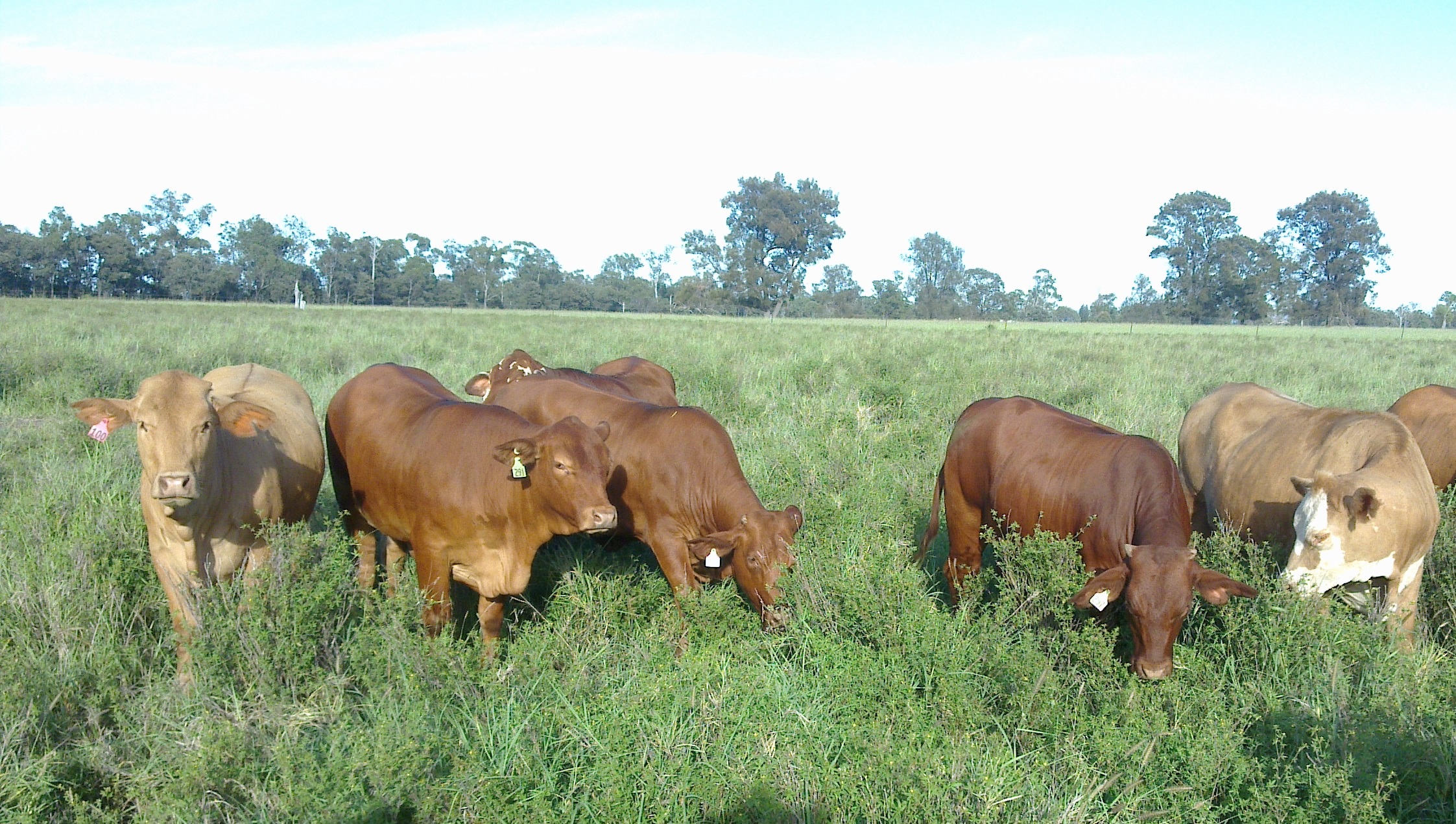
The 120-day study evaluated the impact of Rumin8’s feed additive on enteric methane emissions and productive performance in Nellore cattle under conditions simulating commercial Brazilian feedlot operations. Animals receiving the additive in a total mixed ration (TMR) showed a 50.4% reduction in methane emissions and a statistically significant 5% improvement in feed conversion efficiency compared with cattle fed the same diet without the additive.
The fairy tale of excess methane (and carbon dioxide) causing harm to the environment has been a battering ram for Greens against grass feeding cattle and methane emissions. Numerous studies have found methane is not dangerous to the climate, mankind or anything else. The entire United Nations carbon dioxide/methane scare campaign has fuelled a massive industry called renewables.
Multinational pharma companies, governments and food giants refuse to accept that thousands of years of natural development of digestive systems in ruminants cannot be altered without causing a health problem for the animal or to consumers who eat the chemically-infused meat.
Due to fear-based propaganda levelled at the cattle industry in this “climate crisis”, the farmers lately seem to be forced to attention this relatively minor source of methane production. The farmers are faced with administering chemicals to disrupt normal digestive processes which produce methane in the cattle in the form of a feed additive Bovaer-10, or a vaccine, Rumin8. It is an industry that has lost sight of the fact we consume such animals and an optimal animal metabolic health is essential to us for our health after consumption.
So imagine yourself as a cow for a moment. Your digestive system has evolved over millions of years to process grass – fresh, living grass full of nutrients and natural compounds that your body knows exactly how to handle. Your multiple stomachs work together in perfect harmony to break down this fibrous material, extract nutrients, and maintain your health. Furthermore, you’re free to move (wander freely) to more fresh grass ahead. This is the natural way, the way cattle have eaten for thousands of years.
Now imagine, for the last 80 years and with the advent of industrial agriculture, being suddenly switched to a diet of processed foods and mostly dead grass – the cattle equivalent of going from a lifetime of home-cooked meals to surviving solely on fast food. Furthermore, being limited to a confined space with hundreds of other cows.
This is essentially what happens in modern feedlots during the “finishing” period, where cattle’s diets shift dramatically to contain up to 80% grains and oilseeds like cottonseed. It’s comparable to how your own digestive system might revolt when you drastically change your diet while traveling abroad, except these cattle don’t get to return to their normal diet after a few weeks.
Coles Bovaer ruminant feed additive
https://cairnsnews.org/2025/01/18/coles-bovaer-anti-methane-cattle-feed-additive-is-toxic-to-humans/
Rumin8 CEO David Messina said the collaboration represents an important step toward scaling methane-reducing technologies in one of the world’s largest cattle markets.
“We were pleased to partner with Minerva and ESALQ/USP to assess Rumin8’s ability to mitigate methane and its impact on animal performance in an environment that simulates a commercial Brazilian feedlot setting.”
“Minerva and Rumin8 are both committed to reducing methane emissions from the agriculture and food sector, and it was excellent to have this work validated by one of Brazil’s most respected academic institutions. The results of this study were significant and will form part of our data package as we move toward commercialization in Brazil, home to the world’s largest commercial cattle herd.”
The study also found that methane intensity per kilogram of liveweight gain decreased from 77.2 g/kg to 39.6 g/kg when comparing cattle fed only a TMR with those receiving the additive.
In total, the trial achieved an estimated reduction of 29.8 tonnes of CO₂ equivalent in greenhouse gas emissions, while also delivering productivity gains and lower feed consumption. Independent verification of these results is currently underway by companies specializing in agricultural carbon certification, including Athian and FoodChain ID.
Australia’s largest meat packer, Brazilian-owned JBS Swift has been using the additive Bovaer in all of its feedlots to prevent methane emissions in cattle. Coles and Woolworths are among the largest retailers of JBS beef.
There is no Australian legislative requirement to use this allegedly toxic additive.
The farmers worked out very quickly that some type of seaweed stopped cows from farting / belching but Bill Gates and the weirdos got their junk product into the food chain anyway courtesy of our crooked government and the TGA mafia scum
They aren’t really trying to reduce cow farts…
BECAUSE COWS DON’T EVEN FART! They burp/belch in fact.
See how they can’t even tell the truth about cow farts? Another lie on that great list of lies…Methane does 4/5’s of 5/8’s of bugger all to the climate, even less than co2 does jack shit.
It is not the moo cows that are the cause of methane it is the sort of grass they eat .
Parliament represents the biggest producer of methane from Politicians’ BullS**t.
I have seen mention that bouvaer causes sterility in men, for what ever reason. If this is actually the case then the product should not be used at all, given that possible end result to the consumer.
The farmers-or their-what I have been told by some of their farmer members -pathetic representative organisations should be pushing the barrow of injury to stock and demanding assurances that these chemicals cause no harm to the animals whatsoever.
Material Safety Data sheets would be a good start, plus fully detailed research papers on the Bovaer.
Here’s one:
https://public.spheracloud.net/Pdf/MsdsIAImages/OUYeci1CjEOvvuyFhF9bJQ.PDF
Wonder where IGA and Aldi are getting their meat…..and what about the local butcher shops??
Normal farmers interact with truck-drivers and word gets around pretty quick, trouble is the crooked communist government and totalitarian financiers are hell bent on getting rid of normal farmers and bringing in corporate farming. Our governments are so dumb they will just kowtow to anyone higher up the pyramid than them. Sports fans don’t want to think get the politicians they deserve.
.
Bot:
“Major natural sources of methane (CH₄) come from biological and geological processes where organic matter breaks down without oxygen (a process called anaerobic decomposition). The biggest ones are:
Wetlands (largest source)
Swamps, marshes, and peatlands produce the most natural methane. Waterlogged soils create low-oxygen conditions where microbes generate methane.
Termites
Termites digest plant material with the help of microbes in their guts, releasing methane as a byproduct.
Oceans
Methane is produced in seafloor sediments and by microorganisms. Some is stored as methane hydrates.
Freshwater bodies
Lakes, rivers, and reservoirs can emit methane from sediments, especially in warm or nutrient-rich conditions.
Geological sources
Natural gas seeps from underground reservoirs
Mud volcanoes
Hydrothermal vents
Wild animals (non-human)
Ruminants like deer and other grazing animals produce methane through digestion (similar to livestock, but naturally occurring).”
Bot:
“Methane (CH₄) doesn’t just disappear—it’s broken down through a few key chemical and biological processes, mainly in the atmosphere and in soils.
1. Atmospheric oxidation (the main pathway)
Most methane is destroyed in the air by reacting with hydroxyl radical, often called the atmosphere’s “detergent.”
Methane reacts with OH → forms intermediates → eventually becomes carbon dioxide (CO₂) and water (H₂O)
This process is driven by sunlight and atmospheric chemistry
This is the dominant sink, removing the majority of methane globally.
2. Soil microbes (biological oxidation)
Certain bacteria called methanotrophs consume methane:
They use methane as an energy source
Found in soils, especially well-aerated ones (like forests and grasslands)
They convert methane into CO₂
This is an example of methane oxidation.
3. Stratospheric reactions
A smaller portion of methane reaches the upper atmosphere, where it’s broken down by:
UV radiation
Reactions with chlorine and oxygen radicals
4. Aquatic systems
In oceans and lakes, methane can be oxidized by microbes before it escapes to the atmosphere, especially at sediment-water boundaries.”
The article finishes with -“… Coles and Woolworths are among the largest retailers of JBS beef…”
The answer is staring us all in the face, folks.
Boycott Coles.
Boycott Woolworths.
Don’t stand around all day discussing and arguing all the minutiea and what the neighbors might think.
Just do it.
More animal abuse, as if more is needed to demonstrate the rise of anti-humanist thinking.
Want to disconnect from nature completely, why not join a club and go to an island?
Or better still, why not go live in an underground ex-car park in a smart city?
Seeing the big mobs of livestock are bred in remote areas of Australia what difference does their discharge of methane make on the ecology .
The boffins who imagine that methane is a threat should be thinking wisely of stemming the emissions of methane on public transport and in public buildings where multicultural public servants with different food in their gut congregate together .
Or they should take an interest in the methane evaporated from sewerage ponds installed in every city and town that should be seen as a threat on the local population when you think of what has been flushed down each toilet in areas of high drug use that eventually bubbles to the surface to evaporate into the winds all over everywhere over everyone .