


by AR Williams and Jim O’Toole
The Crisafulli LNP government, trying to outdo its Labor predecessors has just locked up 1 million acres across the Far North, being some of the safest cattle breeding country in Australia. Gone are the cattle and gone are the generational wealth of sustainable grazing knowledge and land protection now subjected to the usual mismanagement of the Far North by Brisbane bureaucrats.
Gone are Westmoreland and Cliffdale stations in the northern Gulf area, sterilised by the Liberal National Party’s adherence to United Nations Agenda 30 treaty. Gone are 40,000 breeders between the three stations, deleted from the declining Queensland herd and rural economy.

Notably LibLab’s protracted offensive against the food supply continues unabated and included in this disgraceful UN land grab are 300,000 acres of tested, arable soils now covered by some esoteric conservation zone on Kendall River Station in central western Cape York Peninsula. Kendall River Station is recognised as having the most plentiful natural fresh water resources on Cape York and is located within one of the safest rainfall areas of Australia. It was purchased by QPWS in the dying days of the former Labor Government for $30m.
The balance area of Kendall, around 400,000 acres has been handed over to an Aboriginal group allegedly with no ties to the area. The former owners of Kendall River Station and other long-time Peninsula graziers have stated numerous times to Cairns News reporters they could find no surviving Aborigines with legitimate ties to this part of Cape York Peninsula.
Even more poignant is the proximity of this massive area of potential agricultural land to the Port of Weipa and a stone’s throw from Rio Tinto’s Amrun Port which has just been dredged to allow bigger ships access for major exports of our non-renewable resource bauxite, exclusively to China.
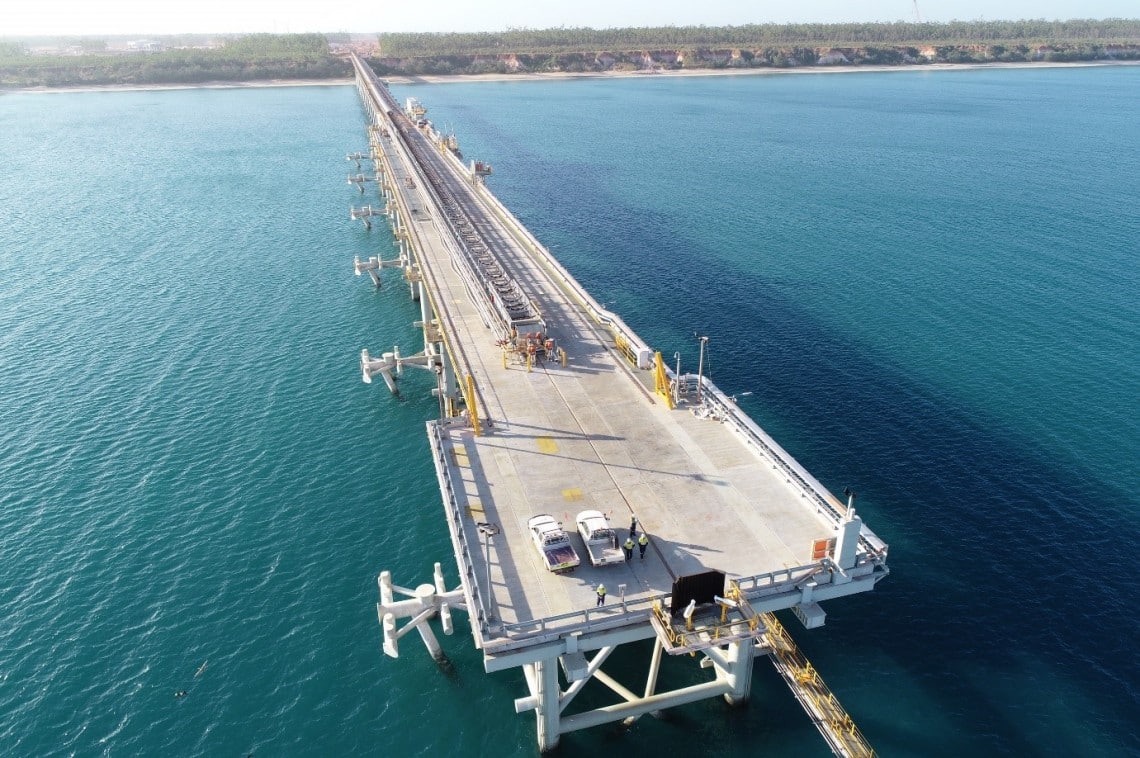
Amrun Port is Rio’s latest shipping venture costing approximately US$1.9 billion to build, featuring a 642-metre jetty and a 306-meter wharf with precast concrete decking, allowing for the export of 22.8 million tonnes of bauxite annually.
This huge area of potential farmland on Kendall could have produced and exported large amounts of food and fibre utilising Amrun Port to feed many Indonesians, Pacific Islanders and Asians just to the north making a tremendous return on investment for grain and other cropping. Or Australian consumers could benefit from the agricultural production this property could provide.
The property could also sustain a significant hardwood timber operation supplying large quantities of sawn timber for Labor’s promised 1.2 million homes by 2030.
Unfortunately the present and former state governments have allowed the entire land area of mineral-rich Cape York Peninsula to become collateral originally for a $60 billion loan deal with Rothschild Bank, according to media reports, struck by former Labor Premier Anna Bligh circa 2010 who later moved on from politics to recently retire as CEO of the Australian Banking Association.
Labor formally locked up the Peninsula under the guise of Aboriginal Freehold Title and national parks, terrible misnomers of political calculus. These Aboriginal deeds are freehold in name only and their onerous conditions ensure mineral and petroleum resources remain in ‘Crown’ ownership and the land cannot be subdivided or sold or used as collateral for indigenous bank lending.
In fact almost none of the vast Peninsula indigenous estate has any resident blackfellas. Many live in Cairns and others in one of 13 communities dotted across Cape York.
As usual rank-and-file blackfellas have been dudded by sharp Labor and Cape York Land Council manouvering to the benefit of the big end of town and some say their own hip pockets.

The LNP government issued a media release trying to ease local opposition to yet more national parks, which severely reduce the council rates base for Cook Shire Council on Cape York and for the Carpentaria Shire Council with the loss of Westmoreland and Cliffdale cattle stations.
Cairns News sent a list of questions to LNP Minister Andrew Powell, who hails from the Sunshine Coast hinterland.
These are the questions the Minister refused to answer:
Regarding the protection of Westmoreland, Cliffdale and Kendall River:
- Has the State Government purchased all or part of Westmoreland Station or Cliffdale and will these properties continue to run cattle and be managed by locals (Cliffdale or Westmoreland managed by Doomadgee)?
- Is there any agreement with Aboriginal bodies for joint management of any of these three properties?
- What role will QPWS take in management of these three properties?
- Will these three properties continue to be held under a Pastoral Holding title?
- If the titles have been changed, what is/are the new titles?
- Is there a cadastral or other map of Kendal River which shows the 137,000 hectares to be protected?
- Will Kendall River continue to run any cattle on any part of the station?
- Is the mining lease over a part of Kendall River active and for how long?
- Does the Minister consider the designated areas of swamp mahogany and Darwin stringybark on Kendall River superflous to needs when these areas or ecosystems are more than adequately represented in the vast areas of Cape York national parks and Aboriginal-held land?
This is a part of a government media release:
- Queensland’s protected area network will expand further following the purchase of three properties in Cape York and the Gulf of Carpentaria.
- The acquisitions include 137,000 hectares of Kendall River Station, 90,000 hectares of part of Westmoreland Station, and 169,000 hectares of Cliffdale Station.
- The landmark acquisition will safeguard critical habitat for threatened species including the palm cockatoo and grey falcon.
Almost 400,000 hectares (1 million acres) of significant habitat across Cape York and the Gulf of Carpentaria will be protected for future generations through a major conservation partnership.
The State Government and The Nature Conservancy(https://www.natureaustralia.org.au/) have partnered to secure significant portions of Kendall River Station, Westmoreland Station and Cliffdale Station, with the Federal Government also contributing to the purchase of Westmoreland Station through the Protecting Important Biodiversity Program.

The media release continues:
Federal Minister for the Environment and Water Murray Watt said this was a fantastic conservation outcome.
“The Federal Government’s $3.5 million contribution to the purchase of Westmoreland Station is part of our $25 million Protecting Important Biodiversity Areas Program,” Minister Watt said.
“We are proud to work with states and territories to secure nature for future generations, and this expansion will go towards our ambitious commitment of protecting 30 per cent of land by 2030.
“We have now protected over 25 per cent of Australia’s land mass, up from 22 per cent when we came to government in 2022.”
The Nature Conservancy’s Director of Conservation Tim Cronin( https://www.natureaustralia.org.au/about-us/who-we-are/our-people/) said the property acquisitions were a remarkable achievement for biodiversity protection.
“This is a positive step toward Australia’s commitment to protect 30 per cent of its lands and oceans by (UN Agenda) 2030 https://sdgs.un.org/goals, and more investment like this is critical to ensure nature in Australia can thrive,” Mr Cronin said.
“We are very excited to be able to support these fantastic purchases for conservation, with the generous support of the Wyss Foundation and Holdfast Collective.”(https://www.patagoniaworks.com/press/2022/9/14/patagonias-next-chapter-earth-is-now-our-only-shareholder#:~:text=They%20will%20also%20guide%20the%20philanthropic%20work%20performed%20by%20the%20Holdfast%20Collective.
Wyss Foundation President Molly McUsic (https://www.wyssfoundation.org/about-wyss-foundation said they were proud to support the permanent protection of areas of north Queensland.
“These areas of north Queensland are home to numerous threatened birds as well as wetlands and other essential habitats.”
“Philanthropy plays a critical role in accelerating the pace of conservation, and this partnership demonstrates the importance of strategic funding in meeting national and global biodiversity goals.”#
Most north Queenslanders have been fed this UN rhetoric of ‘protecting butterflies’ for decades as more and more private, well-managed pastoral and agricultural land disappears from production. Few northerners take much notice of LibLab/UN propaganda and already Cairns News has seen and heard reports of public derision.
A vast swathe of Queensland now under control of QPWS or private conservation bodies sits at 16,183,153 hectares or nearly 40 million acres. The loss to the economy over the past 50 years would be astronomical.
How much longer can Australia continue to be a puppet of the United Nations?
So what happens when you seize control of the energy, water and food supply to a population? You become king of the heap, right? That means you just have to get rid of all the pesky lil gnats that stand in the way, right?
A few days ago I asked the bot what nutrients lab grown meat required and later another query what nutrients are available in sewerage sludge by %, as two unrelated questions the overlap was up to about 80% as I recall, but you see in this blogg where I asked the bot directly it is far more cagey and starts up prattling about safety and so forth, anyone doubt there is a plan didn’t see Soylent Green in their formative years. SG was not a fringe thing it was full HollyWood with top-man Charlton Heston.
Something worth considering are the costs Australians have to pay to camp in National Parks , NT Parks are fee free for Territorians
Sigh
Crisafullis mother in Ingham lives within listening distance of one of Queensland’s most controversial Aboriginal Activists who is the CEO of Aboriginal a corporation in Cape York ‘1500km away’ yet is able to obtain grants and pushes the rainbow serpent to disrupt any activity.
Good idea! We don’t want any legal disputes with the cattle when the Native Title claims come through and grazing and exploration rights aare sold off to overseas interests for a song and a souvenir didgeridoo.
How do we know there will be future generations to enjoy this natural wonderland of butterflies?
The next pandemic and food shortages caused by supply chain disruptions, lack of fertaliser and land use restrictions, will help Australia reach it’s target of 15 million people by 2030.
The government could have saved all that money simply by ordering protections put in place for those bird species much like other bird species protected by State laws .
Took a while to get a succinct straight answer from the bot, “How much sewage sludge could be incorporated into lab grown meat by %”
bot: My assessment: a 10–25% dry-mass yield is a useful best-case hypothesis to test, but the more defensible near-term objective is to recover specific nutrients from sludge-derived material and replace a portion of the conventional culture medium.