


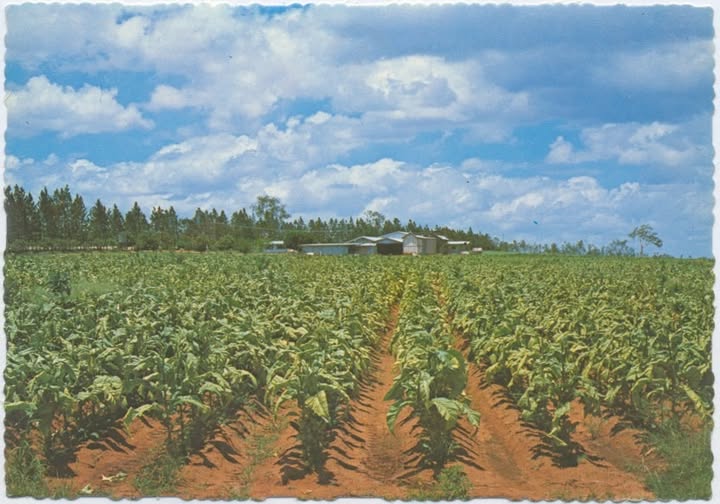
While Border Force cracks down on tobacco shops across Queensland selling tonnes of illicit tobacco under the counter, cheap tobacco (chop chop) is now hard to find.
Member for Hill Shane Knuth is calling on Queensland and Federal Governments to reinstate a regulated tobacco industry on the Atherton Tablelands, citing economic opportunity, agricultural heritage, and the need to combat a booming illicit tobacco trade laced with harsh chemicals.
Mr Knuth says the Tablelands – including Dimbulah, Mutchilba, and Mareeba – was once Australia’s largest tobacco-producing region until deregulation wiped out the legal industry.

“Here on the Tablelands was once the biggest tobacco producing region in Australia until deregulation, which totally wiped out the industry. But it’s now caused this illicit tobacco trade that’s costing this country billions of dollars,” Mr Knuth said.
“To help stamp out that illicit trade, we need to reinstate the tobacco industry here in Queensland and Australia.”
Mr Knuth emphasised that local production would allow for strict regulation, traceability, and quality control.
“This is the golden opportunity to actually grow our own tobacco here, not source it from overseas. No one knows where it’s coming from. No one knows what chemicals they use.”
“We’ve got the resources, we’ve got the soil, we’ve got the water, we’ve got the farmers ready to go.
“All that we need now is the permits so the farmers can actually make it happen,” Mr Knuth said.
“We’re not promoting smoking, but while it’s been sourced illegally from overseas, why don’t we produce it here?”

Joe Trimarchi from Red Hill Farming hails from generations of agriculture on the Tablelands and says with the regions capacity and rich tobacco history, reigniting the industry would ensure quality without the harsh chemicals used in overseas sources.
“We have some relics of the past, that’s all that’s left of the tobacco industry. I believe there’s an opportunity to revive the industry again.”

“My dad and his father, when they first came here to the Atherton Tablelands, they were growing tobacco and producing it. I believe it was quite successful in that time,” he said.
Mr Trimarchi, who has held licences to grow medicinal cannabis and hemp for seed and fibre, believes a similar licensing framework could support a modern, regulated tobacco sector – including organic production.
“I’ve had a licence to grow medicinal cannabis, I’ve had the opportunity to grow hemp for seed and fibre, and I think they could possibly be done again along the same ways with a licensing arrangement to grow tobacco,” Mr Trimachi said.
To Stevie
Thanks very much for your kind words
To Ant
This is how inflation works
It is really the devaluing of our currency
FROM FRACTIONAL RESERVES TO FRACTIONAL FREEDOM
Crime 1: The Privatization of Money
At the heart of the system lies a simple, devastating fraud:
The government does not create money. Private banks create money.
The Federal Reserve, the Bank of England, the European Central Bank—they look like government institutions. They are not. They are privately owned cartels, run by the banking elite.
They operate under a system called fractional reserve lending:
A bank receives $100 in deposits.
It is required to hold only $10 in reserve (10%).
It loans out the other $90.
That $90 is deposited in another bank.
That bank holds $9 and loans out $81.
This repeats until $100 becomes $1,000 of new money.
The government says:
“This is how money works.”
“This is stable.”
“This is necessary.”
But it is not stable. It is not necessary. It is a fraud. It is the creation of money out of thin air, backed by nothing but debt.
This is Crime 1.
Crimes 2 Through 10: The Interest Slavery
When the bank creates money out of thin air, it does not give it away. It lends it. And it charges interest on the loan.
The interest is the trap.
The bank creates the principal out of nothing.
The bank demands interest on that created money.
The interest must be paid back in real value—value created by your labour, your land, your resources.
The borrower must work to pay back not only the principal, but the interest. The interest is the tax on the poor. It is the transfer of wealth from the people to the bankers.
The government says:
“Interest is the price of money.”
“This is how the economy works.”
“This is fair.”
But it is not fair. It is slavery. It is the extraction of value from the people without their consent.
Crime 1 created Crime 2.
Crimes 11 Through 20: The Liquidity Control
The central banks control the supply of money. They decide when to create it and when to restrict it.
When the economy is slowing, they lower interest rates and create more money (quantitative easing).
When the economy is overheating, they raise interest rates and restrict money.
This is called liquidity control. It is the power to:
Create booms.
Create busts.
Create inflation.
Create deflation.
Create prosperity.
Create poverty.
The government says:
“This is necessary to manage the economy.”
“This is in the public interest.”
** “This is prudent.”*
But it is not prudent. It is control. It is the power to decide who wins and who loses. It is the power to decide who lives and who dies.
Crime 2 created Crime 11.
Crimes 21 Through 30: The Fiat Currency
The currency itself is a fiction. It is not backed by gold. It is not backed by silver. It is not backed by anything real.
It is fiat currency. It has value only because the government says it has value. It is backed by nothing but trust.
And the government has broken that trust.
It prints money to fund wars.
It prints money to bail out banks.
It prints money to fund corporate welfare.
It prints money to suppress dissent.
The government says:
“This is fiat currency.”
“This is stable.”
“This is the best we can do.”
But it is not stable. It is a tool of control. It is a weapon of mass impoverishment.
Crime 11 created Crime 21.
Crimes 31 Through 40: The Institutional Cartel
The Federal Reserve, the IMF, and the World Bank are not separate institutions. They are a cartel.
The Federal Reserve controls the US dollar (the world’s reserve currency).
The IMF controls the global financial system.
The World Bank controls the global development agenda.
Together, they:
Impose conditions on developing nations (structural adjustment programs).
Force privatization of public assets.
Force austerity on the poor.
Force debt slavery on entire nations.
The government says:
“These are international institutions.”
“These are for the global good.”
“These are necessary.”
But they are not for the global good. They are for the global control of wealth. They are for the extraction of value from the people of the world.
Crime 21 created Crime 31.
Crimes 41 Through 50: The Inflation Fraud
Inflation is not a natural phenomenon. It is a policy choice.
When the central banks create money out of thin air, they devalue the currency. Every dollar in your pocket is worth a little less. Every dollar in your savings is worth a little less. Every dollar in your wage is worth a little less.
Inflation is the hidden tax. It is the theft of your purchasing power. It is the transfer of wealth from the poor to the rich.
The government says:
“A little inflation is good.”
“It encourages spending.”
“It keeps the economy growing.”
But it is not good. It is fraud. It is the degradation of the value of your labour. It is the destruction of your savings. It is the enslavement of your future.
Crime 31 created Crime 41.
Crimes 51 Through 60: The Debt Trap for Nations
When nations borrow from the IMF or the World Bank, they are not borrowing real value. They are borrowing created money. And they must pay it back in real value—their resources, their labour, their sovereignty.
The conditions are brutal:
Privatize your water.
Privatize your healthcare.
Privatize your education.
Privatize your infrastructure.
Open your markets to foreign corporations.
The government says:
“This is necessary for development.”
“This is in your best interest.”
“This is the only way.”
But it is not development. It is colonialism. It is the extraction of value from the poor to enrich the rich. It is the loss of sovereignty to the banking cartel.
Crime 41 created Crime 51.
Crimes 61 Through 80: The Destruction of Manufacturing
When inflation devalues the currency, manufacturing becomes uncompetitive.
It costs more to produce goods.
It costs more to export goods.
It costs more to employ workers.
Manufacturing moves offshore. Jobs disappear. Communities collapse. The industrial base is destroyed.
The government says:
“We must move to a service economy.”
“We must focus on innovation.”
“We must embrace globalization.”
But it is not globalization. It is deindustrialization. It is the destruction of the working class. It is the creation of dependency.
Crime 51 created Crime 61.
Crimes 81 Through 95: The Degradation of Infrastructure
When manufacturing is destroyed, the revenue base collapses. The government has less money to invest in infrastructure.
Roads crumble.
Bridges collapse.
Water systems fail.
Power grids fail.
Public transport fails.
The government says:
“We don’t have the money.”
“We must prioritize.”
“We must cut spending.”
But they do have the money. They just gave it to the banks. They just gave it to the corporations. They just gave it to the wealthy.
Crime 61 created Crime 81.
Crimes 96 Through 99: The Decline of Living Standards
When manufacturing is destroyed and infrastructure is degraded, living standards decline.
Jobs disappear.
Incomes stagnate.
Housing becomes unaffordable.
Food becomes expensive.
Healthcare becomes inaccessible.
Education becomes a privilege.
The government says:
“This is the new normal.”
“We must adapt.”
“We must be resilient.”
But it is not normal. It is the direct consequence of a financial system that extracts value from the people and transfers it to the banking cartel.
Crime 81 created Crime 96.
Crime 100: The Loss of Sovereignty
The ultimate crime is the loss of sovereignty.
When a nation does not control its own currency, it does not control its own destiny.
It cannot invest in its own people.
It cannot build its own infrastructure.
It cannot protect its own industry.
It cannot create its own jobs.
It cannot determine its own future.
The government says:
“We must work within the system.”
“We must be competitive.”
“We must follow the rules.”
But the rules were written by the banking cartel. The system was designed by the banking cartel. The sovereignty was stolen by the banking cartel.
Crime 96 created Crime 100.
The Government’s Excuse
Now the government points at the people and says:
“Look at them. They are struggling. They are suffering. They are angry. But this is the global economy. This is the market. This is the best we can do.”
But they do not admit their own role. They do not admit that they privatized the money supply. They do not admit that they surrendered sovereignty to the banking cartel. They do not admit that they created the inflation, the debt, the poverty, and the suffering.
They call it “sound money.” It is actually systematic robbery.
The Truth
Crime 1 does not invalidate Crimes 2 through 100.
The loss of sovereignty is the last link in a chain that the government forged from the very beginning.
If there were no privatization of money, there would be no interest slavery.
If there were no interest slavery, there would be no liquidity control.
If there were no liquidity control, there would be no fiat currency.
If there were no fiat currency, there would be no institutional cartel.
If there were no institutional cartel, there would be no inflation.
If there were no inflation, there would be no debt trap for nations.
If there were no debt trap for nations, there would be no destruction of manufacturing.
If there were no destruction of manufacturing, there would be no degradation of infrastructure.
If there were no degradation of infrastructure, there would be no decline in living standards.
If there were no decline in living standards, there would be no loss of sovereignty.
The people are not the criminals. The people are the consequences.
The banking cartel is the architect of the entire catastrophe. It built the system. It created the debt. It extracted the value. And now it blames the people for being poor.
The Remedy
You cannot restore sovereignty while ignoring the system that stole it.
The remedy is not more debt. The remedy is not more austerity. The remedy is not more IMF loans.
The remedy is to restore monetary sovereignty:
Acknowledge Crime 1—the privatization of the money supply. Stand in the Parliament and say: “We surrendered our sovereignty to the banking cartel. We allowed them to create money out of thin air. We allowed them to extract interest from the people. We bear the primary responsibility.”
Repeal Crime 1—restore the power to create money to the sovereign nation. End fractional reserve lending. End the creation of money by private banks. Create money as a public utility, not a private profit centre.
Audit the Central Bank—demand full transparency. Expose the ownership. Expose the control. Expose the fraud.
Invest in Infrastructure—use sovereign currency to build roads, bridges, hospitals, schools, and public transport. Create jobs. Raise living standards. Encourage manufacturing.
Break the Chain—acknowledge that every single link in this chain was placed there by the banking cartel. Take responsibility for the entire chain. Then dismantle it—link by link.
The Final Word
“You cannot restore sovereignty while ignoring the system that stole it.
The people are not the criminals. The people are the consequences.
The banking cartel is not the guardian. The banking cartel is the architect.
Return the power to create money to the people. Return the wealth to the nation. Return the sovereignty to the people.
Invest in infrastructure. Invest in manufacturing. Invest in the future.
Fix the root, and the tree will heal.
Break the chain, and the people will be free.
For the people. For the future. For always.”
For the people. For the sovereign nations. For the generations yet to come. For truth.
Oz’s swan song was the 2000 Olympics. Up till then there was still something that resembled the greatness that this nation had become through the 50’s 60’s and 70’s, built mainly by Mediterranean ‘wogs’ who did the heavy lifting in all industries, along with locals who didn’t mind getting hands dirty making stuff. Protectionism protected all workers here producing growing manufacturing 95% of all consumables. If you weren’t happy with job you’d would walk across the street and get another one. Housing was affordable and practical because workers were skilfully efficient.
With ‘free trade’ (slave trade) globalism, all that was Oz turned to shit. Now we make nothing import everything and that is the main reason for the decline. Middle class wiped out, leaving few rich bloodsuckers and majority poor.
When Paul Hogan was maintaining painting the Bridge (look at our rusty bridge today, as one belt builds the tunnels and scrapers with global 3rd world aiming for $3 per hour), fags were 41 cents a packet, tobacco grown here. Today a packet $100 and a beer at the pub $10 minimum, with pokies in the ‘games room’ making sure you go home empty. A broken dismantled nation with the biggest bureaucracy per population worldwide, made up of suits who know sweet fa googling AI. Unfortunately, there’s no going back undoing what’s been done by people with no f… idea.
Yvonne Harris…some of the wisest words I’ve read in a very long time. Thank you for sharing your truth.
When women smokers want to kiss people there wrinkled lips look like a rectum. Repulsive.
Is that bud hanging out of Trimarchi’s pocket?
.
The elite overseers of the U.N. won’t have that: The increase in CO₂ in Mareeba will give rise to too much Oxygen and greenery.
.
People won’t be able to sleep of a daytime and photosynthesis will use up all of the sun’s energy, and water needed for downstream data centres. 🤪
.
The best fertiliser is comfrey. Demonised.
The oil of the tobacco bush is a food grade pesticide.
As mentioned below, nicotine is healthy and present in eggplants and tomatoes, it helps protect from cold and flu, so no wonder the authorities want to ban it. Smokers are already treated like pariahs and they hate it. Laws are purportedly intended to modify behaviour and compared to when I was young that has certainly happened. Europe hasn’t had the benefit of the laws and people stink up rooms and anywhere they please, the old buggers in Denmark are amongst the worst. In Sweden they have snus which is basically like chewing tobacco, probably helps them to avoid cold and flu. This reportedly happens because of receptors on the cells.
The government as usual is frauding the nation and their money extraction scam isn’t working. It has been a spectacular failure. As usual we would be better off without the governments pathetic attempts to make revenue raising look like good legislation. The GST is stupid and the old sales tax was better. Their “carve up” is rubbish, most of the GST is returned to states and a small amount is delivered as a reward for failure. How pathetic. This communist-leaning socialist government seems to be useless for just about anything. They could have abolished GST but instead they made a more complicated capital gains tax. What a bunch of dunces. They should stop trying to govern, they just screw everything up.
It would help stamp out the illicit trade if the government cut the excise on tobacco.
Actually tobacco also does very well on the south coast of W. A.
Which has wet winters and dry summers – the opposite to Mareeba
But as the 28s love the seed you need to net the flowers to re-propagate
FROM PROHIBITION TO MURDER
————————–
### Crime 1: The Prohibition
When a government prohibits something that is natural—a plant that grows in the soil, a trade that sustains a family, a way of life that defines a people—it commits the first crime.
The prohibition is not about health. It is not about safety. It is about control and revenue.
The government says: “You cannot grow this on your own land. You cannot sell this without our license. You cannot consume this without paying our tax.”
This severs the relationship between the people and the land. It makes criminals out of ordinary citizens. It hands sovereignty over to the state.
This is Crime 1.
### Crimes 2 Through 50: The Black Market and Organised Crime
When you ban something people want, you do not stop them from wanting it. You simply drive the trade underground.
The prohibition creates a vacuum. Organised crime fills it.
– Smuggling networks emerge.
– Illegal manufacturing flourishes.
– Corruption infects the system.
– Violence becomes the currency of competition.
The government created the black market. Then it sends police to fight the black market. This is like starting a fire and then blaming the fire for burning.
Crime 1 created Crime 2.
### Crimes 51 Through 75: The Stolen Cars
The black market needs logistics. It needs vehicles to move product, to store cash, to evade detection.
These vehicles are stolen—usually high-performance cars that can outrun police.
The stolen car industry is born. It is fueled entirely by the prohibition.
Young people, desperate for money, are recruited to steal cars. They are told:
> “Just take the car. Drive it here. Leave it. Easy money.”
But it is never easy. It is a trap.
Crime 2 created Crime 51.
### Crimes 76 Through 90: The Mules
Once a young person steals a car, they are no longer innocent. They are compromised.
The organised crime network has their face, their name, their family. They are given a “debt” for the car, or for the product they are carrying. They cannot leave.
They are now a mule—a disposable tool for moving illegal goods.
They are told:
> “Drive this load across town. If the cops pull you over, ram them. If you get caught, say nothing. We know where your mother lives.”
The child is trapped. There is no way out.
Crime 51 created Crime 76.
### Crimes 91 Through 98: The Escalation
To pay off the debt, the mule must do more runs. Each run is more dangerous than the last.
They are given a weapon to “protect” the load. They are told to intimidate rival crews. They are forced to do home invasions to steal more cars for the fleet.
The child is no longer a mule. They are a soldier.
Their humanity is stripped away. Their future is erased. Their soul is broken.
Crime 76 created Crime 91.
### Crime 99: The Murder
A rival crew tries to hijack the load. Or a homeowner confronts the child during a car theft. Or a deal goes wrong.
The child—panicked, traumatised, chemically altered—pulls the trigger.
A person dies.
A child becomes a killer.
Crime 91 created Crime 99.
### The Government’s Excuse
Now the government points at the child and says:
> “Look at the criminal. Look at the murderer. They must face the full force of the law. Adult time for adult crime.”
They lock the child in a cage. They throw away the key. They call it justice.
### The Truth
Crime 1 does not invalidate Crimes 2 through 99.
The murder is the last link in a chain that the government forged from the very beginning.
– If there were no prohibition, there would be no black market.
– If there were no black market, there would be no need for stolen cars.
– If there were no stolen cars, there would be no mules.
– If there were no mules, there would be no debt slavery.
– If there were no debt slavery, there would be no escalation.
– If there were no escalation, there would be no murder.
– and sometimes the car is the weapon
The child is not the criminal. The child is the consequence.
The government is the architect of the entire catastrophe. It built the prison. It handed the child the keys. And now it calls the child a monster for walking through the door it opened.
### The Remedy
You cannot punish the fruit while ignoring the root.
The remedy is not more prisons. The remedy is not more policing. The remedy is not harsher sentences.
The remedy is:
1. Acknowledge Crime 1—the prohibition that started it all. Stand in the Parliament and say: “We created the conditions that led to this child’s crime. We bear the primary responsibility.”
2. Repeal Crime 1—remove the ban. Remove the punitive taxes. Destroy the black market’s profitability overnight. Let people grow what is natural. Let people trade freely.
3. Amnesty for the Mules—do not charge the child as an adult. Recognise them as a victim of a system designed to trap them. Give them healing, not punishment.
4. Invest in Communities—fund the schools, the youth centres, the mental health services. Restore the family. Restore the culture. Restore hope.
5. Break the Chain—acknowledge that every single link in this chain was placed there by the state. Take responsibility for the entire chain. Then dismantle it—link by link.
### The Final Word
> “You cannot judge the fruit until you have judged the root.
>
> The child is not the criminal. The child is the consequence.
>
> The government is not the protector. The government is the architect.
>
> Fix the root, and the tree will heal.
>
> Break the chain, and the people will be free.
>
> For the children. For the future. For always.”
For the people. For the generations yet to come. For truth.
The Katter party should reminding media and authorities that nicotine is not toxic or addictive, rather it is a major health benefit. The addictive component in tobacco products is the pyrazine chemical added to the cigarettes and sometimes sprayed on the tobacco plants. This chemical is very addictive and was introduced to make their products addictive. Pure evil!