


By Alison Ryan
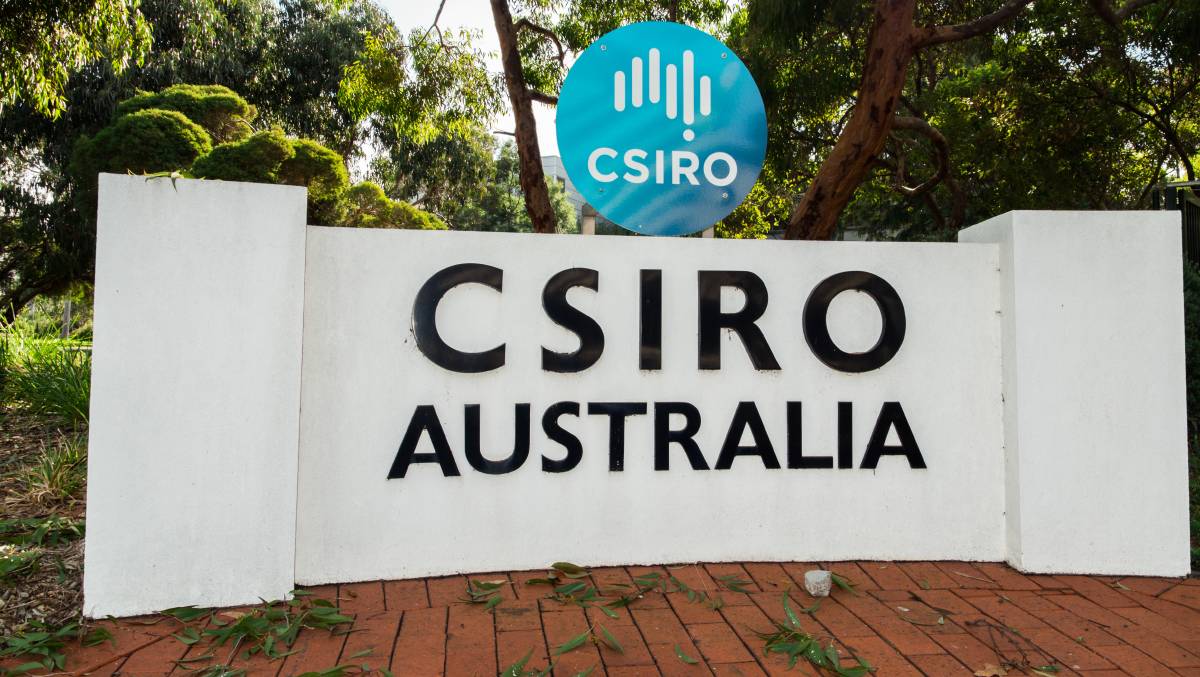
CSIRO is nuts over consumption and production of food in Australia. The CSIRO is saying a “rural social licence” is needed in the agricultural industry as they journey to Net Zero.
CSIRO is clearly a government agent planning to eradicate people and their livelihoods.
Keep an eye on the CSIRO FB page. They are clear that the future of food is not from farms, instead from laboratories. CRISPR, a technology that can be used to edit genes and Synthetic Biology technologies are the planned future for our food supplies. There are many concerns regarding this new technology and there is a need for people to be actually aware that this is the envisioned future.
“Firstly, precision fermentation will allow us to manufacture molecules, compounds, active ingredients and products using synthetic organisms, such as yeasts, to convert into food and livestock feed. These microbes will be powered by biomass, sourced in part from agriculture. Instead of paddocks growing crops, pastures, and livestock, the “factory” will be stainless steel vats growing colonies of microbes at work. Secondly, gene editing will allow us to more precisely engineer the genome of target crops and animal organisms….” CSIRO.
csiro.au/en/news/all/articles/2022/november/a-thriving-future-trends-in-agricultural-innovation
One Health System for Australia…!!!
https://www.mja.com.au/journal/2022/217/9/vision-one-health-system-australia-need-rethink-our-health-system
CSIRO says it is actively contributing to the Australian government’s response to, and reporting on, the UN SDGs. Its hubris is palpable in its own document “United Nations Sustainable Development Goals (SDG) CSIRO submission 17/616 March 2018”, made at a time when most Australians would have been woefully uninformed of the goals, except for Australians in the academic and political arena.
CSIRO boasts that it is one of the few institutions in the world that has the capability to work across all 17 SDGs, because its transformative, systems-wide innovation involves interlinked technological, institutional and policy change across scales along with partnerships operating at local, national, regional and global scales.
As a business tool for the Corporation COMMONWEALTH OF AUSTRALIA, CSIRO describes its work with New Age buzz words like interconnected, holistic, integrated, interdisciplinary and multi-sectoral. CSIRO’s analyses include, Our Future World, Australia 2030 navigating our uncertain future, Australian National Outlook, and Food and Agribusiness roadmap. Their focus is conjectural on the grand illusion that “All is One”; and yet CSIRO is actively contributing to progressing the UN SDGs which is affecting every Australian, and we have not voted whether we want to become a subsidiary of the global governance system.
True scientific fact-finding and research has fallen foul of these 17 deliberately dumbed-down feel-good UN SDGs; and for achieving new age planetary citizenship. Donald Keys, speechwriter for U Thant Secretary-General of the United Nations 1961 to 1971 and Founder/President of Planetary Citizen, stated that if the New Age movement does become a target of alarmed forces … it will offer a … target very hard to identify. Keys was also the World Association of World Federalists’ representative to the United Nations from 1969-1982.
CSIRO hosted the Earth Systems and Climate Change (ESCC) Hub from 2015, which ran until mid-2021. The Hub became a national partnership of government and universities: CSIRO, Bureau of Meteorology, University of New South Wales, Australian National University, Monash University, University of Melbourne, and University of Tasmania.
CSIRO was the leader ensuring that Australia’s policies and management decisions will be informed by Earth systems and climate change science, now and into the future.
ESCC was supported by funding through Australian Government’s National Environmental Science Program (NESP) (nespclimate.com.au/). Its predecessors were the National Environmental Research Program (NERP) (which concluded in June 2015) and the Australian Climate Change Science Program (which concluded in June 2016). Between 2016 and 2021, NESP was delivered through six research hubs – In addition to the ESCC Hub, these were:
• Clean Air and Urban Landscapes Hub
• Marine Biodiversity Hub
• Northern Australia Environmental Resources Hub
• Threatened Species Recovery Hub
• Tropical Water Quality Hub
The National Environmental Science Program (NESP) is a long-term commitment. It funds environment and climate research through an investment of $145 million from 2014–15 to 2020–21, and a further $149 million from 2020–21 to 2026–27. The current phase of the NESP program is being delivered through 4 multi-disciplinary and applied research hubs. The hubs are partnerships between organisations that collectively bring together multiple disciplines and viewpoints to form a national capability. The 4 hubs are:
• Climate Systems
• Marine and Coastal
• Resilient Landscapes
• Sustainable Communities and Waste.
This phase of NESP includes 4 applied research initiatives, each led by a single hub but progressed in conjunction with all hubs. These initiatives are designed to facilitate cross-hub collaborations on priority issues. These initiatives are:
• Threatened and migratory species and threatened ecological communities, led by the Resilient Landscape Hub
• Protected place management, led by the Marine and Coastal Hub
• Climate adaptation, led by the Climate Systems Hub
• Waste-impact management, led by the Sustainable Communities and Waste Hub.
CSIRO has also developed a comprehensive indicator set for Asia and the Pacific, accompanied with a policy analysis and capacity development, which aims to support countries in that region to enhance their national policy efforts in achieving the SDG outcomes.
CSIRO has been accepted as a member of the UNEP-hosted Biodiversity Indicators Partnership (.bipindicators.net/) which, in addition to serving the needs of the Convention on Biological Diversity (CBD), is now playing a key role in reporting on the SDGs.
CSIRO scientists are chapter authors for the Intergovernmental Panel on Climate Change (IPCC) assessments, chair global monitoring networks or their sub-committees (e.g. the Intergovernmental Oceanographic Commission of UNESCO Global Ocean Observing System), and regularly contributes to United Nations meetings on developing monitoring programs and indicators including those relevant to the SDGs.
Australia, has an opportunity to exert major influence on the SDGs by contributing to a refinement of indicators that countries can report against as they approach the end of Agenda 2030. CSIRO says its extensive and established scientific expertise, international reputation, and the close connection between their scientists and managers and policy makers, puts Australia in a position to contribute at a level that few countries could match.
CSIRO participates in a range of international forums that specifically support the delivery of SDGs, or are relevant to global efforts to develop treaties or regulatory frameworks.
CSIRO contributes to many capacity building projects that assist countries across the IndoPacific and beyond to assess status and trends of SDG relevant indicators and to address what needs to be done to advance the goals.
CSIRO reckons their understanding of “Science” and how transformational change processes occur, place them in a unique position to support Australia’s efforts both domestically and internationally in progressing the SDGs.
CSIRO says its deep connections across the Australian and the global innovation system support impacts at a large scale, which should cause a national outcry as we face further domestic social, economic and environmental impositions and subsequent loss of our personal freedoms and livelihoods.
CSIRO says it is actively contributing to the Australian government’s response to, and reporting on, the UN SDGs. Its hubris is palpable in its own document “United Nations Sustainable Development Goals (SDG) CSIRO submission 17/616 March 2018”, made at a time when most Australians would have been woefully uninformed of the goals, except for Australians in the academic and political arena.
CSIRO boasts that it is “one of the few institutions in the world that has the capability to work across all 17 SDGs”, because “its transformative, systems-wide innovation involves interlinked technological, institutional and policy change across scales along with partnerships operating at local, national, regional and global scales”.
As a business tool for the Corporation called the COMMONWEALTH OF AUSTRALIA, CSIRO describes its work with New Age buzz words like interconnected, holistic, integrated, interdisciplinary and multi-sectoral. CSIRO’s analyses include, Our Future World, Australia 2030 navigating our uncertain future, Australian National Outlook, and Food and Agribusiness roadmap. Their focus is conjectural on the grand illusion that “All is One”; and yet CSIRO is actively contributing to progressing the UN SDGs which is affecting every Australian, and yet we have not voted whether we want to become a subsidiary of the global governance structure.
True scientific fact-finding and research have fallen foul of these 17 deliberately dumbed-down feel-good UN SDGs; and for new age planetary citizenship. Donald Keys, speechwriter for U Thant Secretary-General of the United Nations 1961 to 1971 and Founder/President of Planetary Citizen, stated that if the New Age movement does become a target of alarmed forces … it will offer a … target very hard to identify. Keys was also the World Association of World Federalists’ representative to the United Nations from 1969-1982.
CSIRO hosted the Earth Systems and Climate Change (ESCC) Hub from 2015, which ran until mid-2021. The Hub became a national partnership of government and universities: CSIRO, Bureau of Meteorology, University of New South Wales, Australian National University, Monash University, University of Melbourne, and University of Tasmania.
CSIRO was the leader ensuring that “Australia’s policies and management decisions” will be informed by “Earth systems and climate change science, now and into the future”.
ESCC was supported by funding through Australian Government’s National Environmental Science Program (NESP) (nespclimate.com.au/). Its predecessors were the National Environmental Research Program (NERP) (which concluded in June 2015) and the Australian Climate Change Science Program (which concluded in June 2016). Between 2016 and 2021, NESP was delivered through six research hubs – In addition to the ESCC Hub, these were:
• Clean Air and Urban Landscapes Hub
• Marine Biodiversity Hub
• Northern Australia Environmental Resources Hub
• Threatened Species Recovery Hub
• Tropical Water Quality Hub
The National Environmental Science Program (NESP) is a long-term commitment. It funds environment and climate research through an investment of $145 million from 2014–15 to 2020–21, and a further $149 million from 2020–21 to 2026–27. The current phase of the NESP program is being delivered through 4 multi-disciplinary and applied research hubs. The hubs are partnerships between organisations that collectively bring together multiple disciplines and viewpoints to form a national capability. The 4 hubs are:
• Climate Systems
• Marine and Coastal
• Resilient Landscapes
• Sustainable Communities and Waste.
This phase of NESP includes 4 applied research initiatives, each led by a single hub but progressed in conjunction with all hubs. These initiatives are designed to facilitate cross-hub collaborations on priority issues. These initiatives are:
• Threatened and migratory species and threatened ecological communities, led by the Resilient Landscape Hub
• Protected place management, led by the Marine and Coastal Hub
• Climate adaptation, led by the Climate Systems Hub
• Waste-impact management, led by the Sustainable Communities and Waste Hub.
CSIRO has also developed a comprehensive indicator set for Asia and the Pacific (https://www.unenvironment.org/regions/asia-and-pacific/regional-initiatives/supporting-resource-efficiency/indicators-resource), accompanied with a policy analysis and capacity development (http://www.switch-asia.eu/fileadmin/user_upload/RPSC/policy-assessment/Needs-Analysis-Final-report.pdf), which aims to support countries in that region to enhance their national policy efforts in achieving the SDG outcomes.
CSIRO has now been accepted as a member of the UNEP-hosted Biodiversity Indicators Partnership (https://www.bipindicators.net/) which, in addition to serving the needs of the CBD, is now playing a key role in reporting on the SDGs.
CSIRO scientists are chapter authors for the Intergovernmental Panel on Climate Change (IPCC) assessments, chair global monitoring networks or their sub-committees (e.g. the Intergovernmental Oceanographic Commission of UNESCO Global Ocean Observing System), and regularly contributes to United Nations meetings on developing monitoring programs and indicators including those relevant to the SDGs.
Australia (CSIRO says) has an opportunity “to exert major influence on the SDGs” by contributing to a refinement of indicators that countries can report against as they approach the end of Agenda 2030. CSIRO says its extensive and established scientific expertise, international reputation, and the close connection between their scientists and managers and policy makers, puts Australia in a position to contribute at a level that “few countries could match”.
CSIRO participates in a range of international forums that specifically support the delivery of SDGs, or are relevant to global efforts to “develop treaties or regulatory frameworks”.
CSIRO contributes to many capacity building projects that assist countries across the IndoPacific and beyond to assess status and trends of SDG relevant indicators and to address what needs to be done to “advance the goals”.
CSIRO reckons their understanding of “Science” and “how transformational change processes occur”, place them in a unique position to support Australia’s efforts both domestically and internationally in progressing the SDGs.
CSIRO’s “deep connections across the Australian, and the global, innovation system” support impacts at a “large scale”, which should cause a national outcry as we face further social, economic and environmental impositions on our personal freedoms and livelihoods.
King Charles who’s for WEF’s Great Reset just gave his royal consent for GMO/DNA transmutations of plants and animals in the UK. A guy that only eats organic food and won’t touch any other food when travelling except the food/chefs he brings along. He know the plebs are fed slop.
When will compromised regulators such as @US_FDA and @GovCanHealth stand up against corporate/globalist interests and eliminate GMO, lab substitutes, nanotech and graphene/mRNA toxins from the food supply? FDA and Health Canada have been prostituting themselves to merchants long enough!
Dongsheng Explains No.6
How is China ensuring food security for 1.4 billion people?
“……………..Addressing the agrarian question became one of the main goals of the Chinese Revolution, and even before coming to power, it began a process known as the Land Reform to confiscate land from landlords and return it to the peasantry…………”
https://dongshengnews.org/en/china-ensuring-food-security/
China is not a Communist country –
Why China Doesn’t Have a Property Tax – The New York Times
h ttps://www.nytimes.com/2023/05/10/business/china-property-tax.html
Why China Doesn’t Have a Property Tax. Local governments are sinking further into debt, but after years of talk, officials have yet to introduce a real estate tax. 8. Public resistance to a …
Australia is a Communist country –
Local government property taxes – If you don’t pay your property taxes the corporate government takes it and puts it up for auction. So is it really your property to begin with?
Karl Marx’s “10 Planks” to seize power and destroy freedom:
1. Abolition of Property in Land and Application of all Rents of Land to Public Purpose.
2. A Heavy Progressive or Graduated Income Tax.
3. Abolition of All Rights of Inheritance.
4. Confiscation of the Property of All Emigrants and Rebels…………..
zzz3856
CSIRO’s Australian Centre for Disease Prepardedness is networking for global One Health.
One Health has a “new concept” – It’s One Health One World – and is based on the idea that the world is restoring to maintain balance and synergy. One World One Health will cover things physical, mental and spiritual with a global significance for the larger global family.
Çoncepts such as: The world is one family, Interdependence, Unity, Diversity,
Respect all life forms, and Work together, will be expressed through religious practices.
Step back to 1974 when New Age leader Vera Alder stated “the illuminations of modern science and discovery…would develop a new ‘Bible’ of a World Religion which will be the basis of future education”.
In the emerging global state, Adler states that “the Christ will build an integrated new world order”.
One World One Health is stepping up to a very dangerous and wicked level. The new order has already deceived many.
“CSIRO, ABC and SBS need to be defunded.”
No way! The ABC and SBS need to be of the people, for the people and by the people.
As it is they are instruments of brainwashing and dumbing down instead of genuine news and information services. They splash us with woke garbage and hide the truth or anything that is inconsistent with their garbage.
We MUST get control of the public broadcasters in the public interest! They must genuinely serve us Aussies instead of brainwashing and manipulating us for our $BILLION PLUS dollars every year!
Public media REACH is the only way to present balanced views of what’s going on, expose the lies and stop the rot. How it can be achieved is something we should URGENTLY figure out and act on.
100% agree Isaac731 – all are captured woke govt agencies wasting our public monies on stupid nonsensical issues trying to stay relevant to MSM narratives! Prune their budgets to nil is a great option.
Malcolm Roberts recently did an update on the WHO treaty and whilst there has been some good news re changes, imbedded in this is the One Health system which Australia seems to be taking on board (need to find an update on this). It covers medical, animal, agriculture etc.. Could this One Health system be what CSIRO is operating under? We MUST say no to all of it… as WHO are not to be trusted in any way.
Found this link, but there may be a more recent one, just to give you an idea…
https://www.mja.com.au/journal/2022/217/9/vision-one-health-system-australia-need-rethink-our-health-system
The CSIRO is shit.
If you work for the CSIRO, you’re shit, you have shit for brains, and your mother and father were test tubes in a sewage farm.
And you’re going to Hell.
CSIRO, ABC and SBS need to be defunded.
The CSIRO showed their true colours and affiliations to the offshore New World Order and it’s agendas to kill off we, the people with creating food contamination and getting involved with the experiments that were used towards creating the patented bio-weaponized Cov id-19 scam deadly injections.
Once you have seen it, it does not go away.
[…] Go to Source on cairnsnews.org Follow altnews.org on Telegram Please donate now! 00 […]