


By staff writers
How did the Labor Party manage to rush its hated Hate Speech bill through the parliament on January 20, 2026? Or the attached bill to initiate a gun buyback scheme which Queenslanders opposed by 67 per cent in a News Ltd public poll held in December?
PM Albanese, although ignorant of the basic tenets of law, like the Liberals, believe that parliament is supreme and can do as it pleases. Many members of the judiciary naively have the same belief.
Nearly all of the university lecturers were trained under the same tertiary curriculum which their pupils, now magistrates and judges put into practice when in court. This is why Maritime Magistrates Courts simply follow the parliamentary dictum of sovereignty when it is the people who are actually sovereign.

Numerous legal scholars have questioned summary jurisdiction because at Common Law and Chapter Three of the Commonwealth Constitution Act 1901 every accused person is entitled to have their case heard by a jury. Furthermore as Dr John Wilson maintains a jury can nullify a repugnant ‘law’ when hearing a case and the judiciary must take notice, because the people are the final arbiters.
District Court judges on appeals imbued by Dicey blindly follow a Magistrate’s decision. Similarly the Supreme Court which sometimes can trim the edges.
Other researchers maintain Australia is largely governed by Canon law. Canon law is the internal, oldest continuously functioning legal system in the Western world, governing the Catholic Church’s organization, sacraments, and hierarchy. It consists of 1,752 laws—codified in 1983 for the Latin Church—aimed at ordering ecclesial life, safeguarding rights, and promoting the “salvation of souls.”
This subject we will leave for another day.
Here we analyse Dicey’s parliamentary sovereignty with the essence of Plato’s The Republic as a valuable research tool.
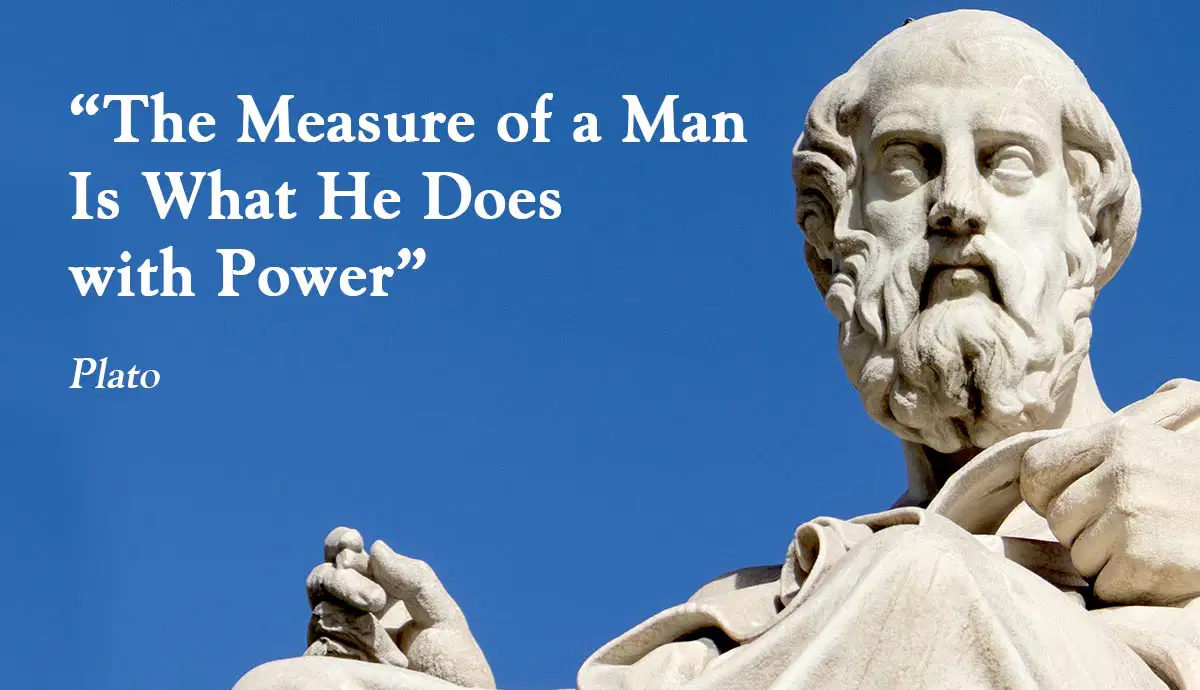
Plato’s ideal and just state is an aristocracy, the rule of the best. He believed leaders needed to be wise and trained in how to run a state, just as captains of ships are trained in how to run a ship.
In constitutional law,
A.V. Dicey’s (1835–1922) conception of parliamentary sovereignty is the bedrock of the UK’s unwritten constitution. His theory, famously articulated in An Introduction to the Study of the Law of the Constitution (1885), defines Parliament as the supreme legal authority.

Dicey’s doctrine is traditionally split into two “limbs”:
- Positive Limb: Parliament has the right to “make or unmake any law whatever” on any subject.
- Negative Limb: No person or body (including courts) has the right to override or set aside the legislation of parliament
Core Tenets of the Diceyan View
- Unlimited Legislative Authority: Parliament can legislate on anything, from extending its own life (e.g., the Septennial Act 1715) to abolishing fundamental rights.
- No Binding of Successors: One Parliament cannot pass a law that a future Parliament cannot repeal. This is maintained through the doctrine of implied repeal, where a later Act automatically overrides a prior inconsistent one.
- Legal vs. Political Sovereignty: Dicey distinguished “legal sovereignty” (the absolute power of Parliament) from “political sovereignty,” which resides with the electorate. He argued that while Parliament is legally omnipotent, it is practically limited by the “external” fear of popular resistance and the “internal” character of the lawmakers themselves.
Modern Challenges to the Doctrine
The “absolutist” Diceyan view has faced significant pressure in the 20th and 21st centuries:
- The Rule of Law: Critics argue that if the rule of law is the ultimate controlling factor, then Parliament cannot be truly absolute. In the landmark Jackson v Attorney General (2005) case, several judges suggested obiter that courts might reject legislation that attempted to subvert the rule of law or abolish judicial review.
- New Zealand’s “Quiet Revolution”: In New Zealand, which follows the Diceyan tradition, former President of the Court of Appeal Sir Robin Cooke suggested that some common law rights “lie so deep” that even Parliament cannot override them (e.g., in Taylor v NZ Poultry Board). (Magna Carta and 1688 Bill of Rights enshrined in Australian law)
- Human Rights and Devolution: The Human Rights Act 1998 and the devolution of powers to Scotland, Wales, and Northern Ireland have created practical limits. While Westminster technically retains the power to override these, constitutional conventions (like the Sewel Convention) make it politically difficult or impossible to do so.
- Australia’s Modification: Australia does not follow the “purest form” of Diceyan sovereignty because its Parliament’s powers are limited by a codified constitution and the High Court’s power of judicial review.
In Australia numerous lawyers, magistrates and judges, indeed politicians themselves mistakenly believe that Dicey’s parliament is supreme.
This is a political misjudgement as the parliament indeed is not sovereign. One cannot put the cart before the horse. If there were no people then there would be no parliament, therefore without people the parliament cannot exist.
Take one step back and it is entirely evident the people are supreme, sovereign. The people are the final arbiters which is why elections, the cornerstone of democracy, are embedded into the Commonwealth Constitution of Australia Act 1901.
One could ask why political parties are not mentioned in the Constitution?
Similarly any reference to a premier or a prime minister cannot be found in the Constitution.
Ah! they say but we have the Westminister Tradition, yes, and according to the late Constitutional analyst and former MHR Arthur Chresby, this UK derived conspiracy of the oligarchs is a concoction of the corrupt political parties enabling them to take control of and manipulate the parliament.
It has no Constitutional validity and Westminster is not mentioned in the Australian Constitution.
Several scholars and judges have provided dicta that oppose or challenge the strict interpretation of parliamentary sovereignty and the rule of law as formulated by A.V. Dicey in the late 19th century. Key figures who presented opposing or alternative views include:
- Sir Edward Coke (Dr. Bonham’s Case, 1610): While predating Dicey, Coke’s dictum that the common law could control acts of Parliament and adjudge them void is the foundational alternative to Dicey’s absolute parliamentary sovereignty.
- Sir Ivor Jennings: Challenged Dicey’s interpretation of the “rule of law,” arguing that it was a political maxim rather than a legal principle, and criticized his view of the “public order” state in favor of a “public service” state.
- Sir John Laws & Sir Stephen Sedley: In the late 20th and early 21st centuries, these judges expressed views questioning absolute sovereignty, with Sedley famously stating, “The Crown is as Sovereign in the Courts as it is in Parliament”.(The Crown was removed from Australian law by the High Court in Sue-v-Hill, 1999, albeit this decision was founded on the unlawful Australia Act 1987)
- Iain Stewart: Challenged the intellectual foundations of Dicey’s work, arguing that his fear of arbitrary power did not extend to the judiciary and that his views were based on ideological, rather than purely legal, grounds.
- Joseph Raz: Identified Dicey’s formulation of the rule of law as a “perversion of the doctrine,” arguing instead that the rule of law is a matter of degree, not an absolute, and must be balanced against other values.
- H.W.R. Wade: Argued that Dicey’s view of absolute sovereignty was challenged by the idea that the rule of law is a “fundamental political fact” that ultimately rests on the behavior of judges, not just acts of Parliament.
Dicey’s own views were not entirely monolithic, as he shifted from endorsing absolute sovereignty (1885) to acknowledging popular sovereignty (1913)
Plato The Republic
Plato’s philosophical concerns in the dialogue are ethical and political. In order to address these two questions, Socrates and his interlocutors construct a just city in speech, the Kallipolis. They do this in order to explain what justice is and then they proceed to illustrate justice by analogy in the human soul. On the way to defending the just life, Socrates considers a tremendous variety of subjects such as several rival theories of justice, competing views of human happiness, education, the nature and importance of philosophy and philosophers, knowledge, the structure of reality, the Forms, the virtues and vices, good and bad souls, good and bad political regimes, the family, the role of women in society, the role of art in society, and even the afterlife.
Plato’s ideal and just state is an aristocracy, the rule of the best. He believed leaders needed to be wise and trained in how to run a state, just as captains of ships are trained in how to run a ship.
He divided his ideal state into three classes. The lowest and largest class is the producers: the farmers, craftsmen, traders, and others involved in commerce. The next class is the warriors, those who defend the state. They are educated in sports, combat, and philosophy and tested by both terrifying and tempting situations. From the best of warrior class, the ruling class is drawn. Its members will study philosophy and be given government and military positions until age 50, when the best of them become philosopher kings.
Plato believed every human’s soul is divided into three parts: appetite, spirit, and reason. Each of his three classes matches one aspect of a person’s soul. The lower class is linked to appetite, and it owns all the land and controls all the wealth. The warrior class is spirited and lives by a code of honor. The ruling class is linked to reason and lives to gain wisdom.
The philosopher kings will prefer seeking truth to ruling, but a law will compel them to rule. They will obey the law and take their turns as rulers.
The truth is that the State in which the rulers are most reluctant to govern is always the best and most quietly governed, and the State in which they are most eager, the worst.
The warrior and ruling classes live in barracks, eat together, and share possessions. None has families. All children of these classes are brought up without knowing their parents. In this way, Plato tries to keep these classes from gaining wealth or producing family dynasties.
Plato concluded:
Until philosophers are kings, or the kings and princes of this world have the spirit and power of philosophy, and political greatness and wisdom meet in one, . . . cities will never have rest from their evils . . . .
Well folks,
All very nice in theory.
In practice, here in the real world outside of academic postulation, what we thought was our country has been hijacked lock, stock & barrel, from East to West and North to South, by a pack of Treasonous foreign-owned corporate Luciferian gangsters.
They don’t work for us and they don’t answer to us, folks, so OF COURSE all their schemes and machinations are undertaken without the slightest shred of consultation or consent of the Australian people. They CAN do whatever the Hell they like whenever they like to whomsoever they choose, and they have the ARMIES of gun-toting shit-for-brains hired mercenary thugs to prove it.
That’s right, folks, they ARE supreme, they can even KILL anyone they feel like killing in broad daylight on national television and get away with it scot free, with not the slightest threat of any blowback or repercussion or consequence at all, EVER. We know this for a fact, folks, because they DID and they DO exactly that.
So there’s the problem, folks, talking about the way things are SUPPOSED to be doesn’t MAKE it that way. Far from it. Chances are anyone who tries to piously wag the finger and assert the non-existent “people’s authority” will end up dead, because that’s what those ARMIES of gun-toting shit-for-brains hired mercenary thugs are there for.
If you ever want to see some REAL change, then be prepared to PHYSICALLY ENFORCE the change. Think of Nepal, folks, and maybe Mr. Rope and Mr. Lamp Post. Anything less kinetic, anything less emphatic, will just see us all continue down the utterly impotent meekly compliant voting and petitioning path to extermination and national extinction at the hands of a ruthless relentless utterly remorseless pack of foreign-owned thieving blood-thirsty mass-murdering corporate Globalist gangsters.
“Hate speech”: what was once known broadly by adults as defamation – slander if it was purely oral, libel if it was put in writing
The employment of baba-speak says it all
We need a new Monarchy who will serve its purpose to protect the rights of the common people .