10 thought on “Coal powered family wagon an improvement on electric vehicles”
I was dead against EV’s for many years. Except for use to deliver locally the post and milk. However, the Chinese company CATL has come with a Sodium-ion battery that has outstanding performance. It costs perhaps US$150 per kW-h. But it is not really for transportation. Combines with PV cells, it makes a lot of sense in much of Australia.
——– AI
Recent sodium-ion batteries in 2025 have made significant advancements and now offer competitive features compared to lithium-ion batteries, though each has distinct strengths and limitations.
Key comparative points are:
– Energy Density: Sodium-ion batteries currently achieve about 175-200 Wh/kg (example: CATL Naxtra battery), which is improving but still generally lower than lithium-ion’s 140-280 Wh/kg range. Lithium-ion still leads for compact, high-energy applications.[1][2][3][4]
– Raw Materials: Sodium is abundant and inexpensive (2.3% of Earth’s crust), making sodium-ion batteries cheaper and more sustainable environmentally. Lithium is rare and costly, with mining causing more environmental damage.[2][4]
– Cycle Life: Some advanced sodium-ion batteries now reach 10,000 to 20,000 cycles with about 70-90% capacity retention, while lithium-ion can exceed 12,000 cycles, often providing longer lifespans.[3][4][1]
– Charging Speed: Sodium-ion technology offers faster charging, with some models charging 80% in about 12-15 minutes, surpassing typical lithium-ion charging times (~45 minutes for 80%).[7][2]
– Temperature Performance: Sodium-ion batteries excel in cold environments, maintaining 90-92% capacity at -30 to -40°C, better than lithium-ion which can degrade significantly under cold conditions.[4][2][3]
– Safety: Sodium-ion batteries have higher thermal stability (thermal runaway threshold ~350°C) and are less prone to overheating or catching fire than lithium-ion (~270°C), making them safer.[2][4]
– Applications: Lithium-ion remains dominant in portable electronics, high-performance EVs, and devices demanding high energy density and light weight. Sodium-ion is gaining traction in large-scale energy storage, low-speed electric vehicles, and cold climates due to cost and safety advantages.[3][4][2]
In summary, recent sodium-ion batteries represent a promising and more sustainable alternative with cost-effective, safer, and cold-weather advantages, but lithium-ion batteries still lead in energy density and are preferable where lightweight, compact power is crucial.
This comprehensive comparison reflects the state of battery technology as of 2025.
Loading...
So what happened to the cow fart – powered vehicle idea? Is it off?
Is it because it’s too explosive? Darn.
Let’s all drive a horse-drawn buggy again,
and pooper-scoopers shall be paid exceptionally well.
Loading...
The point of the video being lost on some perhaps that baseload electricity is from coal. Australia has vast coal reserves, look up some maps on duckduckgo images you will see there is enough to get us through the next ice-age and provide enough wonderful plant-food (CO2) to make all the plants of the world happy if they are not snowed under in the next ice-age, which will probably start within 1000 years – by which time we will still have vast coal reserves.
I wonder how the anti-nucular lobby will feel about charging their Teslas from a reactor.
Loading...
Yay! There just isn’t enough acid rain to go around and this smogmobile will fix that right smart!
Loading...
For every toxic combustible electric vehicle on the road, government must legislate that it is compulsory for the owners to have a safety marshal walk in front of the vehicle with a red flag to warn of their approach so as not to cause harm to children and the hearing impaired.
When parked or at charging bays, e-vehicles must be located within designated e-vehicle safety zones no less than 15 metres by 15 metres square, with bunding to contain toxic runoff deemed detrimental to the environment, roped off with danger signs and with DuPont level C hazmat suits (plug) and fire department certified fire extinguishers at the ready located in appropriate storage units on the borders of the safety zones.
Registered E-vehicle owners be mandated to hold personal liability insurance against damage to the atmosphere, soil and waterways caused by toxic gasses and to insure against all damage caused to others whilst being transported on passenger vessels.
What else 🤔
That owner look-at-me’s purchase and provide in advance, appropriate PPE for four years old preschoolers working the African cobalt mines for e-battery ingredients; for their effort rewarded with a roof over their heads at night and a bowl of gruel to satisfy the desires of ideologue e-vehicle consumers.
That severe penalties for passing legislation that is anti discriminatory be applied to policymakers.
Loading...
Satire that makes SENSE !
Loading...
Well folks,
Something to look forward to in the chaotic dystopian future?
Remember that wood-gas powered vehicles were not so uncommon some decades back during the scarcity-driven adaptations and innovations of the war years, even some enterprising individuals still driving them today, never a fuel shortage so long as there’s some firewood to be had at the side of the highway.
And you DO understand that “wood-gas” is plain old Carbon Monoxide or CO for short, right? Because Carbon Monoxide happens to be combustible and burns to produce Carbon Dioxide, or CO2, you know, PLANT FOOD.
Wood-gas or coal, take your pick, folks. Better for the hip pocket, and better for the environment. The forests and the vege gardens will all be thanking you.
Loading...
Sure beats Tesla’s runaway 180 degree fire bombs and good for the environment!
Plants and trees life’s matter after all we thank on all organic life on Earth for C02.
Now at 556 PPM in my kitchen, same it ever was. NZ would be even lower I bet.
Loading...
I did a survey the other day and they tried asking me what would be acceptable in an electric vehicle for a 1000km journey, like charging times etc…I ticked the box that said ‘Nothing’.
In a petrol car I can be filled up, paid for in about 5mins max and off finishing my journey. Charging the batteries is completely unacceptable and totally inefficient. The power is usually from coal fired power anyway, its a ‘robbing Peter to pay Paul’ scenario. Makes absolutely no difference to the climate.
co2 is 4 parts in 10,000 of the atmosphere, just one variable of over 300 known variables. It is a friggen sick joke. I don’t find it funny at all.
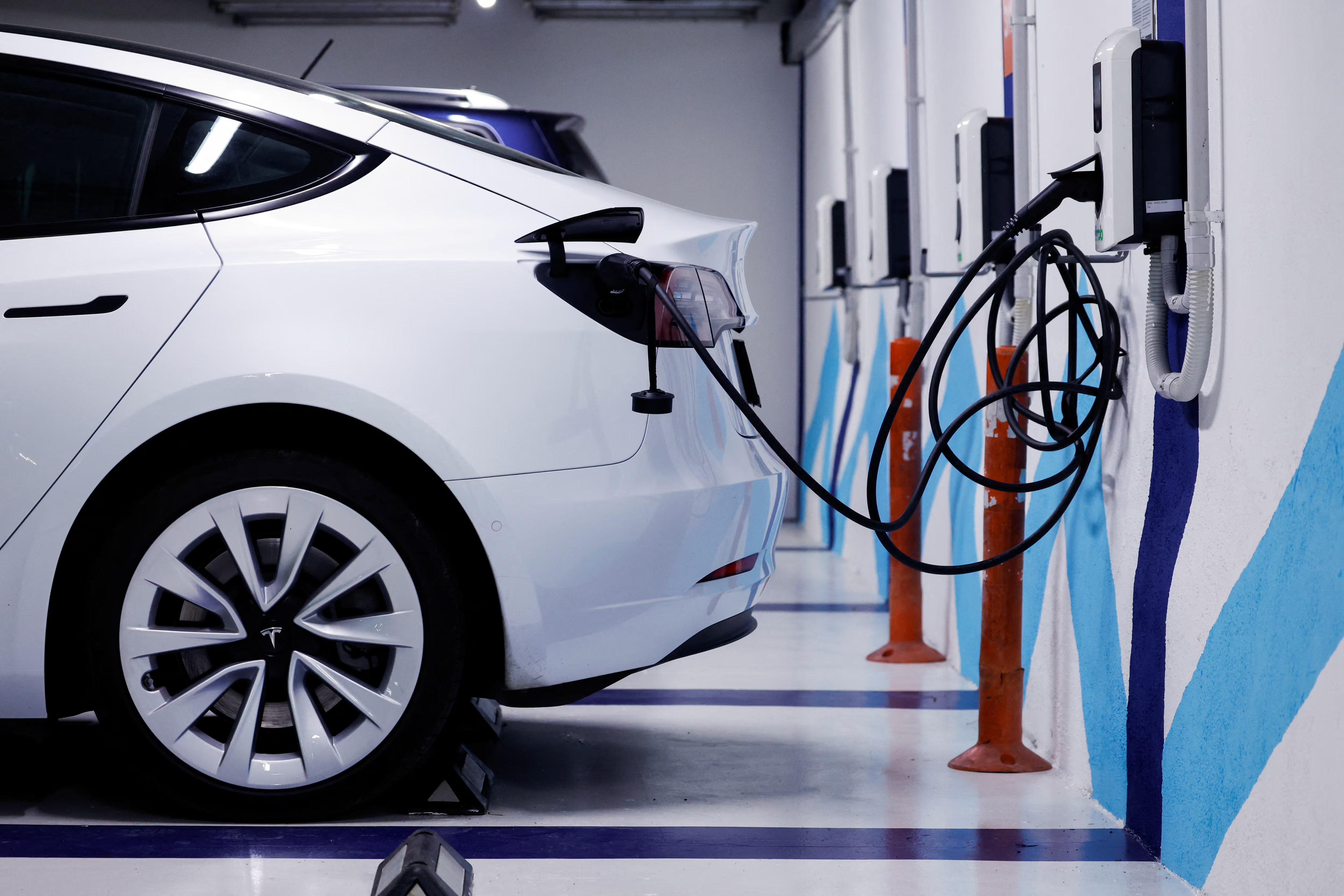


I was dead against EV’s for many years. Except for use to deliver locally the post and milk. However, the Chinese company CATL has come with a Sodium-ion battery that has outstanding performance. It costs perhaps US$150 per kW-h. But it is not really for transportation. Combines with PV cells, it makes a lot of sense in much of Australia.
——– AI
Recent sodium-ion batteries in 2025 have made significant advancements and now offer competitive features compared to lithium-ion batteries, though each has distinct strengths and limitations.
Key comparative points are:
– Energy Density: Sodium-ion batteries currently achieve about 175-200 Wh/kg (example: CATL Naxtra battery), which is improving but still generally lower than lithium-ion’s 140-280 Wh/kg range. Lithium-ion still leads for compact, high-energy applications.[1][2][3][4]
– Raw Materials: Sodium is abundant and inexpensive (2.3% of Earth’s crust), making sodium-ion batteries cheaper and more sustainable environmentally. Lithium is rare and costly, with mining causing more environmental damage.[2][4]
– Cycle Life: Some advanced sodium-ion batteries now reach 10,000 to 20,000 cycles with about 70-90% capacity retention, while lithium-ion can exceed 12,000 cycles, often providing longer lifespans.[3][4][1]
– Charging Speed: Sodium-ion technology offers faster charging, with some models charging 80% in about 12-15 minutes, surpassing typical lithium-ion charging times (~45 minutes for 80%).[7][2]
– Temperature Performance: Sodium-ion batteries excel in cold environments, maintaining 90-92% capacity at -30 to -40°C, better than lithium-ion which can degrade significantly under cold conditions.[4][2][3]
– Safety: Sodium-ion batteries have higher thermal stability (thermal runaway threshold ~350°C) and are less prone to overheating or catching fire than lithium-ion (~270°C), making them safer.[2][4]
– Applications: Lithium-ion remains dominant in portable electronics, high-performance EVs, and devices demanding high energy density and light weight. Sodium-ion is gaining traction in large-scale energy storage, low-speed electric vehicles, and cold climates due to cost and safety advantages.[3][4][2]
In summary, recent sodium-ion batteries represent a promising and more sustainable alternative with cost-effective, safer, and cold-weather advantages, but lithium-ion batteries still lead in energy density and are preferable where lightweight, compact power is crucial.
This comprehensive comparison reflects the state of battery technology as of 2025.
So what happened to the cow fart – powered vehicle idea? Is it off?
Is it because it’s too explosive? Darn.
Let’s all drive a horse-drawn buggy again,
and pooper-scoopers shall be paid exceptionally well.
The point of the video being lost on some perhaps that baseload electricity is from coal. Australia has vast coal reserves, look up some maps on duckduckgo images you will see there is enough to get us through the next ice-age and provide enough wonderful plant-food (CO2) to make all the plants of the world happy if they are not snowed under in the next ice-age, which will probably start within 1000 years – by which time we will still have vast coal reserves.
I wonder how the anti-nucular lobby will feel about charging their Teslas from a reactor.
Yay! There just isn’t enough acid rain to go around and this smogmobile will fix that right smart!
For every toxic combustible electric vehicle on the road, government must legislate that it is compulsory for the owners to have a safety marshal walk in front of the vehicle with a red flag to warn of their approach so as not to cause harm to children and the hearing impaired.
When parked or at charging bays, e-vehicles must be located within designated e-vehicle safety zones no less than 15 metres by 15 metres square, with bunding to contain toxic runoff deemed detrimental to the environment, roped off with danger signs and with DuPont level C hazmat suits (plug) and fire department certified fire extinguishers at the ready located in appropriate storage units on the borders of the safety zones.
Registered E-vehicle owners be mandated to hold personal liability insurance against damage to the atmosphere, soil and waterways caused by toxic gasses and to insure against all damage caused to others whilst being transported on passenger vessels.
What else 🤔
That owner look-at-me’s purchase and provide in advance, appropriate PPE for four years old preschoolers working the African cobalt mines for e-battery ingredients; for their effort rewarded with a roof over their heads at night and a bowl of gruel to satisfy the desires of ideologue e-vehicle consumers.
That severe penalties for passing legislation that is anti discriminatory be applied to policymakers.
Satire that makes SENSE !
Well folks,
Something to look forward to in the chaotic dystopian future?
Remember that wood-gas powered vehicles were not so uncommon some decades back during the scarcity-driven adaptations and innovations of the war years, even some enterprising individuals still driving them today, never a fuel shortage so long as there’s some firewood to be had at the side of the highway.
And you DO understand that “wood-gas” is plain old Carbon Monoxide or CO for short, right? Because Carbon Monoxide happens to be combustible and burns to produce Carbon Dioxide, or CO2, you know, PLANT FOOD.
Wood-gas or coal, take your pick, folks. Better for the hip pocket, and better for the environment. The forests and the vege gardens will all be thanking you.
Sure beats Tesla’s runaway 180 degree fire bombs and good for the environment!
Plants and trees life’s matter after all we thank on all organic life on Earth for C02.
Now at 556 PPM in my kitchen, same it ever was. NZ would be even lower I bet.
I did a survey the other day and they tried asking me what would be acceptable in an electric vehicle for a 1000km journey, like charging times etc…I ticked the box that said ‘Nothing’.
In a petrol car I can be filled up, paid for in about 5mins max and off finishing my journey. Charging the batteries is completely unacceptable and totally inefficient. The power is usually from coal fired power anyway, its a ‘robbing Peter to pay Paul’ scenario. Makes absolutely no difference to the climate.
co2 is 4 parts in 10,000 of the atmosphere, just one variable of over 300 known variables. It is a friggen sick joke. I don’t find it funny at all.
The new government fleet.